Wednesday, 14 September 2016

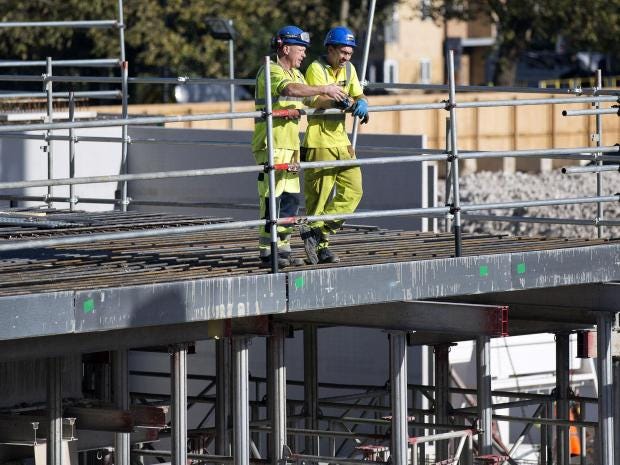
Freedom of movement 'vital' to UK construction post Brexit, industry experts warn Government
Freedom of movement 'vital' to UK construction post Brexit, industry experts warn Government

 builders_RF_Getty.jpg


A coalition of professional bodies has warned the Government of a construction crisis if access to skilled workers cannot be secured following UK’s vote to leave the EU.
The UK construction industry relies heavily on European labour. Nearly 12 per cent of the 2.1 million construction workers come from abroad, according to the Office for National Statistics.

The Royal Institute of British Architects (RIBA), the Royal Institution of Chartered Surveyors (RICS), the Chartered Institute of Building (CIOB) and the Royal Town Planning Institute (RTPI) outlined their concerns in a joint statement to David Davis, the Brexit Secretary.
The group representing Britain’s architects, surveyors, planers and builders said the free movement of labour within the EU has been “vital” to the growth and flexibility of the construction sector.
“We are in the grip of our worst construction skills crisis in almost 20 years,” Amanda Clack, RICS president, said.
“There is a real concern within our industry that if access to a skilled workforce is further restricted, Britain could stop building. My colleagues and I would urge Government to keep this at the front of their minds when they come to negotiate our withdrawal from the EU,” she added.
The letter outlined five other priorities for the Government to focus on during the post referendum negotiations with the EU. These include access to european markets and colloborative research that the EU has enabled and promoted.


Britain's FTSE ends slightly higher, miners lead

Britain's FTSE ends slightly higher, miners lead


LONDON, Sept 14 (Reuters) - Britain's top shares index closed slightly higher on Wednesday, breaking a three-day losing run, as firmer mining stocks enabled the market to recover some ground.
The blue-chip FTSE 100 index finished 0.12 percent firmer, near a one-month low but still up around 7 percent since the start of 2016.
Miners were the best performers, with the UK mining index rising 1.6 percent. Anglo American, Glencore and Antofagasta gained 1.6 to 2.5 percent.
The basic resources sector was lifted by firmer copper prices and data showing economic conditions perked up in August in China, the world's second-biggest economy and the biggest consumer of metals.
"We still favour the commodity sector, with Glencore being our top pick," said Roderic Owen-Thomas, director at London-based trading firm Mayfair Capital Limited.
However, luxury goods group Burberry fell 2.1 percent on the back of cautious updates from rivals such as Hermes and Richemont, with Hermes' shares sliding 8.8 percent after the company scrapped its sales growth targets.
Shares in easyJet fell 4.2 percent, the top decliner in the FTSE 100 index, after Barclays cut its target price for the stock to 1050 pence from 1150 pence.
"Given uncertainty around UK trading and the European geopolitical climate, visibility for the winter and FY17 is particularly low," Barclays analysts said in a note.
"On balance we think FY17 earnings will slip backwards as easyJet maintains its 8-9 percent growth rate, prioritising long term strategic opportunities over short term yields. Cash generation for the next few years will likely be poor, although the dividend is secure."
Online grocer Ocado, which is in the FTSE 250 mid-cap index, also fell sharply for the second day in a row after broker downgrades following its warning earlier this week of pressure on its profit margins. Ocado stock closed 7.6 percent lower.
The FTSE, along with world stock markets in general, has fallen over the last week due to uncertainty over when the U.S. Federal Reserve will next raise interest rates.
However, the fact interest rates in Britain remain at record lows has enabled the FTSE to recover from June's shock 'Brexit' vote for Britain to quit the European Union. Those low rates have hit returns on bonds and cash and driven investors to the better returns available from the stock market